Introduction:
Public safety emergency communication systems from LinkValue provide mission-critical connectivity for urban safety, large-scale event security, and multi-agency crisis response. Specifically, the architecture establishes mobile field command hubs through rugged portable consoles. In addition, it integrates body-worn cameras and aerial drones to achieve real-time video collection and precise personnel positioning. Furthermore, it connects frontline operations directly with municipal emergency command centers. Therefore, public safety agencies significantly enhance on-site response efficiency during complex incidents.
Introduction of solutions:
Dedicated Architecture for Public Safety Emergency Communication
This solution is specifically engineered for extreme emergency scenarios involving power outages, circuit failures, and network blackouts. Centered on a rugged portable command kit, it integrates ad-hoc networks and satellite communication. In addition, it connects frontline personnel telemetry to build an independent emergency network. Therefore, it enables reliable interconnection between forward temporary command posts and central emergency bureaus.
The hardware adopts an integrated lightweight design and can be rapidly deployed within 5 minutes without complex configuration. Through ad-hoc multi-hop transmission and satellite backhaul, it solves the challenges of high-definition video transmission in network-free environments. Furthermore, it eliminates coordination bottlenecks for emergency departments. Consequently, it guarantees dependable public safety emergency communication during natural disasters and complex crisis operations.
Key Features:
- Ad-hoc Network, Infrastructure-Free Connectivity:
Powered by MESH ad-hoc networking backpack units, the system builds a decentralized, self-healing wireless communication network. In addition, it supports multi-hop relay transmission (8+ hops) with a line-of-sight range up to 10 km. This enables reliable voice, video, and data communication at rescue sites without public infrastructure.
- Integrated Space-Air-Ground System, Seamless Coordination:
By integrating portable satellite terminals, UAVs, and portable responder terminals, he system establishes a unified transmission framework. Furthermore, the forward command post connects with the rear command center via satellite links for real-time audio/video transmission and command dispatch, overcoming geographical limitations.
- One-Click Deployment, Simplified Operation:
All equipment is ready to use upon startup, supporting rapid deployment. The portable command console integrates audio/video matrix and communication modules, allowing single-person operation and transport, meeting the fast-response requirements of front-line rescue missions.
- Unified Visual Command, Intelligent Dispatching:
Equipped with a “Single Map” emergency command platform, the system provides real-time visualization of personnel and equipment locations. It supports video access, trajectory tracking, and map-based dispatching, enabling command staff to “see, communicate, and control” effectively.
- Multi-Terminal Integration, Full-Service Coverage:
Compatible with various sensing devices such as body-worn terminals and smart helmets, the system captures high-definition on-site audio and video. It also supports voice intercom, group broadcasting, and emergency conferencing, delivering an integrated “perception–transmission–command” solution.
- Highly Adaptable, Stable and Reliable:
Designed for harsh environments, the equipment operates within a wide temperature range of -20°C to +55°C and meets IP65 or higher protection standards. With built-in high-capacity batteries, it can operate continuously for over 2 hours without external power, ensuring reliability in extreme conditions such as heat, humidity, and dust.
Structural diagram

Application Scenarios:
- Major Natural Disaster Relief:
Scenarios where public or private networks are disabled due to earthquakes, mudslides, floods, or typhoons—such as search and rescue in cut-off mountainous areas, on-site temporary command, and cross-regional rescue coordination.
- Forest and Grassland Fire Response:
Fire monitoring, on-site firefighting command, and personnel tracking/safety assurance in remote, network-free forest or grassland areas, enabling real-time audio-visual transmission from the fire scene and remote command.
- Underground/Confined Space Operations:
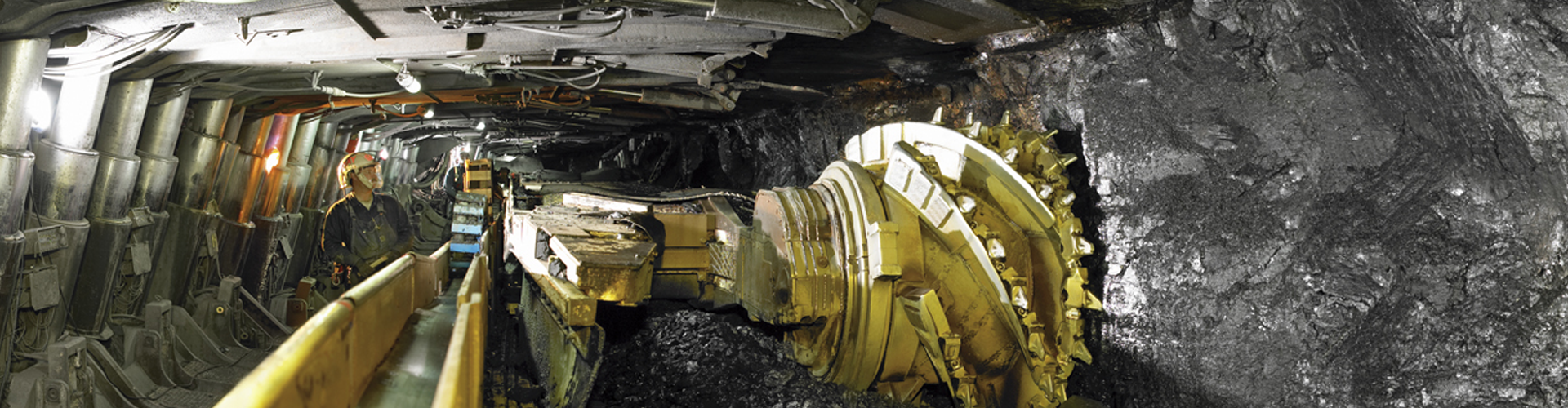
Emergency response and rescue operations in signal-free areas like underground utility tunnels, mines, and tunnels; establishing communication between underground sites and surface command centers via self-organizing networks.
- Emergency Response in Remote Areas:
Handling sudden incidents in areas with weak communication infrastructure (e.g., rural villages or remote mountains), such as workplace safety accidents or public security incidents, facilitating on-site command and coordination with rear-echelon support.
- Large-Scale Field Operation Support:
On-site communication and command dispatch for network-free field activities, such as engineering construction, geological survey, and large-scale emergency disaster drills enabling real-time connectivity between field personnel and command centers.
Real-Time Video Dispatch in Public Safety Emergency Communication:
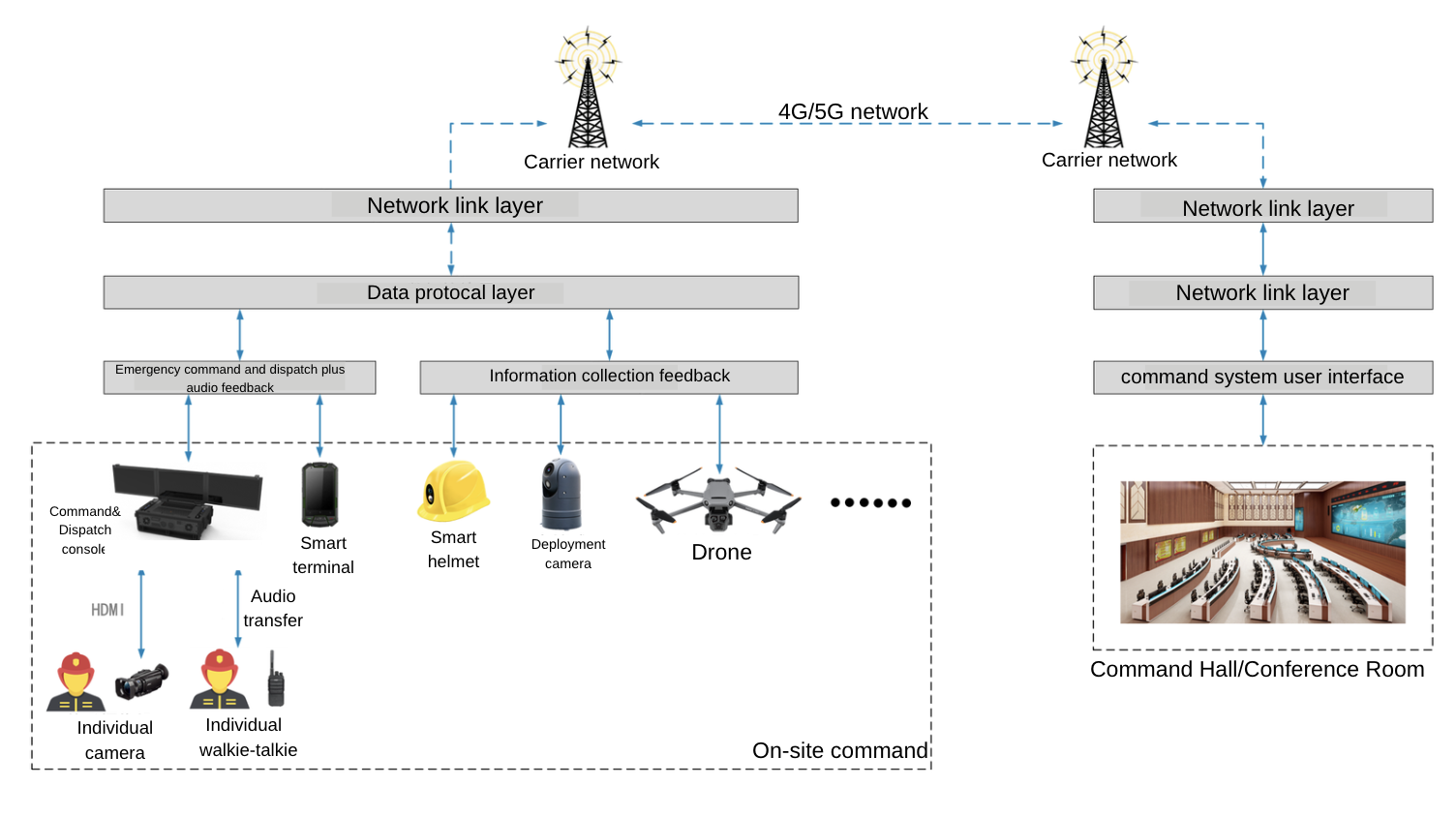
This solution is built on 4G/5G public and private communication networks, with a portable command console serving as the core on-site node. It enables seamless 4G/5G data transmission among various emergency devices, including UAVs, body-worn cameras, portable surveillance units, and individual terminals. The system establishes an integrated emergency command platform featuring “on-site data acquisition – network transmission – cloud-based dispatch – unified management.”
The solution supports unified access and transmission of multi-protocol devices. Through a cloud-based command and dispatch platform, it enables centralized management of all emergency equipment, unified scheduling of audio and video resources, and real-time monitoring of on-site situations. It is also compatible with existing industry software platforms, eliminating “information silos” and enhancing the intelligence, precision, and collaboration of emergency command operations in network-covered environments.
It is suitable for a wide range of scenarios with 4G/5G coverage, such as urban emergency response, daily law enforcement, and campus/industrial park management.
Key Features:
- High-Speed 4G/5G Transmission with Real-Time HD Streaming:
Leveraging 4G/5G connectivity, the system supports real-time HD audio and video streaming. Therefore, command centers can clearly monitor on-site details with ultra-low latency. - Unified Access for Multiple Devices with Full Protocol Compatibility:
Supports 4G/5G connectivity for UAVs, body-worn cameras, portable surveillance units, smart helmets, and individual terminals. Compatible with mainstream protocols such as GB28181, ONVIF, and SIP, and supports customization and integration with various industry software platforms, enabling seamless device-platform interoperability. - Cloud-Based Unified Management and Global Dispatch:
A cloud-based command and dispatch platform enables remote device registration, permission management, and centralized control. It supports cross-region and cross-department scheduling, as well as shared audio/video resources, achieving “one-network unified management and full-domain visualization.” - Portable Command Console as On-Site Hub with Dual Command (Local + Cloud):
The portable command console serves as the on-site command center, integrating 5G communication, audio/video decoding, and on-site conferencing capabilities. It supports local command and dispatch while synchronizing data to the cloud command center, enabling bidirectional command issuance and audio/video interaction between local and remote systems to meet hierarchical command requirements. - Multi-Service Integration with Intelligent Dispatching:
Integrates multiple functions including video monitoring, voice intercom, notification broadcasting, emergency conferencing, trajectory tracking, and incident reporting. It supports multi-channel video access, recording and playback, and remote PTZ control. Command personnel can conduct real-time dispatch anytime, anywhere via PCs, tablets, and smartphones.
Structural diagram
Application Scenarios:
- Urban Emergency Response:
Handling incidents such as fires, traffic accidents, and public safety events in areas with 4G/5G coverage—including urban firefighting and rescue, emergency road repairs, and on-site command for large-scale event security.
- Routine Law Enforcement and Regulation:
Supporting daily patrols by municipal authorities, traffic management, and facility safety inspectors. In addition, it utilizes 4G/5G transmission from body-worn cameras to visualize field operations. This enables real-time dispatching and remote supervision from central command offices.
- Industrial Park and Enterprise Safety Management:
Conducting routine safety monitoring and emergency drills in areas like industrial parks, chemical plants, and logistics hubs; employing drone patrols and fixed-point surveillance units to achieve unified cloud-based monitoring of the entire site and rapid on-site command.
- Traffic Hub and Large-Scale Event Support:
Ensuring security and emergency preparedness at high-traffic venues such as airports, railway stations, stadiums, and exhibition centers; leveraging multi-device 4G/5G connectivity to gain comprehensive situational awareness, ensure rapid response to incidents, and facilitate cross-departmental coordinated command.
- Grassroots grid-based management:
Grid-based emergency management for local areas—such as communities, sub-districts, and townships—utilizing 4G/5G transmission from individual-carried terminals and mobile surveillance units to enable real-time incident reporting, remote dispatching from command centers, and rapid response.
- Cross-departmental collaborative emergency response:
For complex incidents requiring coordinated multi-agency response, cloud platforms facilitate unified dispatching across fire, medical, and municipal safety teams. Therefore, this eliminates departmental silos and significantly enhances collaborative operational efficiency.
Case Study: Public Safety Emergency Communication in Metropolitan Events

Metropolitan event security and municipal emergency agencies face high communication demands during major public gatherings. To solve this, operational teams deployed the [4800-type command console] as on-site mobile command hubs. This console provides stable access to [portable command consoles] and public dispatch networks. In addition, it utilizes image transmission technology to achieve low-latency audio and video streaming from the scene. Command personnel use the 4800 console to monitor venue conditions in real time and promptly coordinate emergency response teams. Consequently, this provides solid command support for urban safety in full alignment with international [APCO public safety communication standards] .