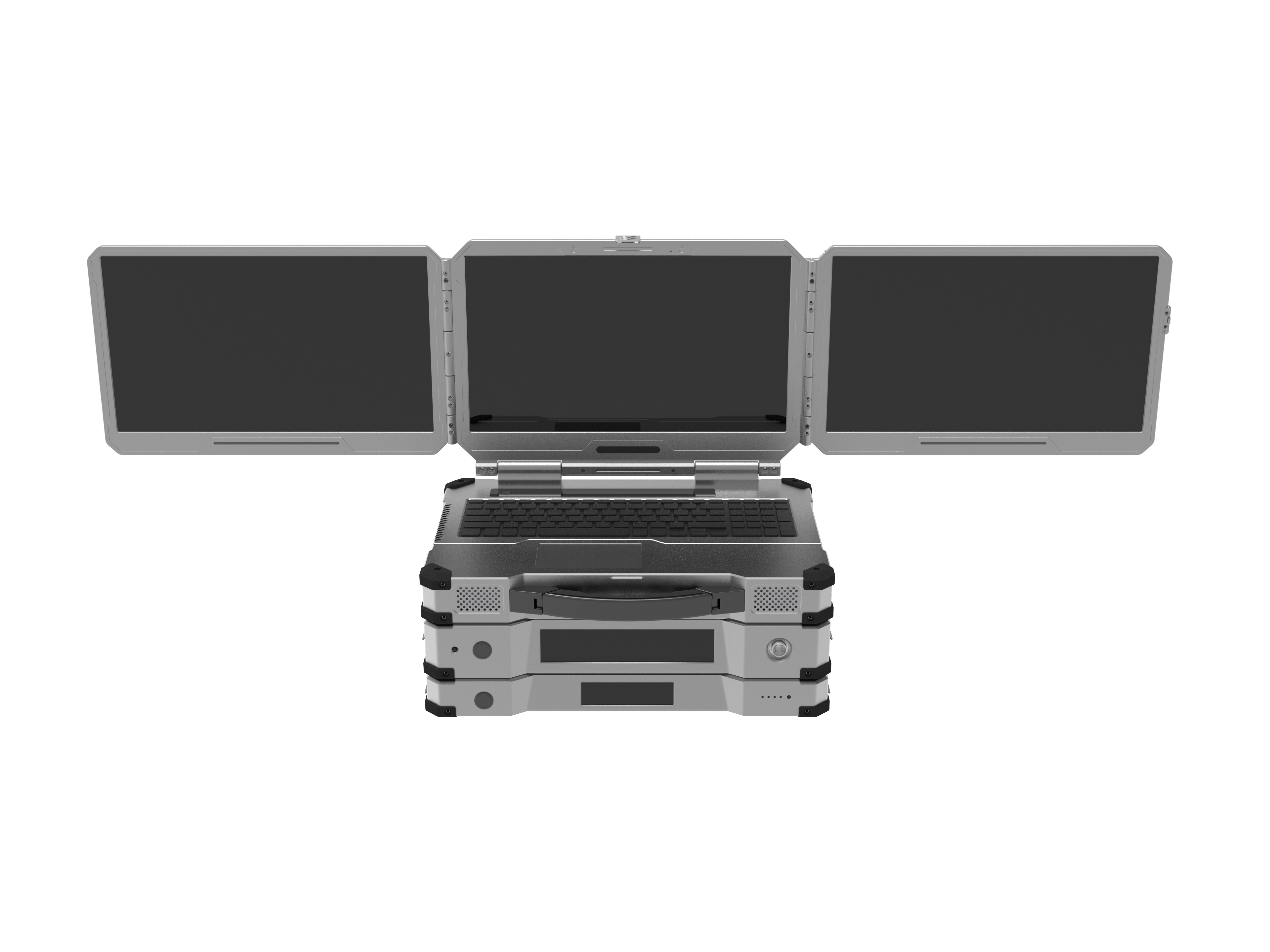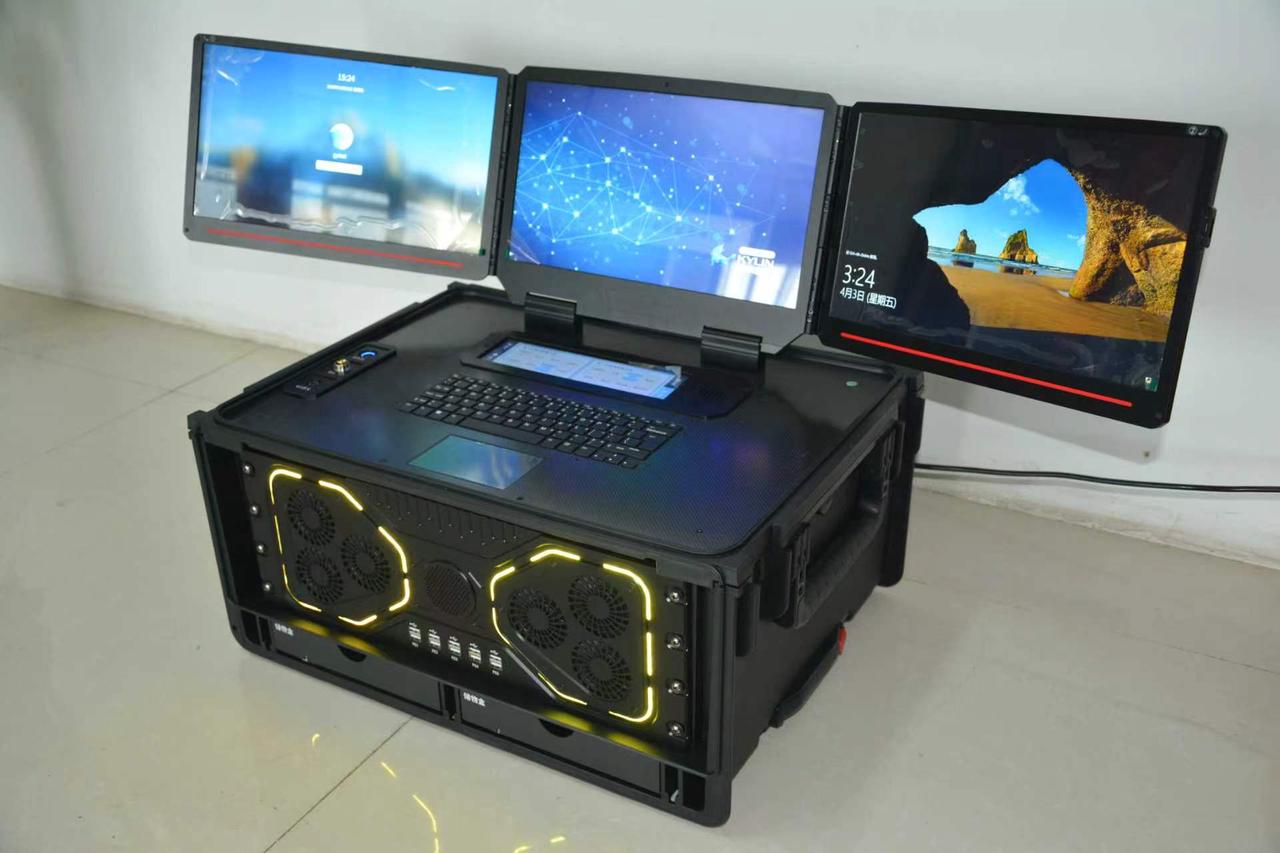
Establishing a reliable network hub in remote locations requires specialized hardware that survives where standard equipment fails. When choosing a field laptop computer, organizations must look beyond traditional, fixed-chassis hardware to avoid communication downtime. The upgraded LinkValue X2800 represents a paradigm shift in field deployment, officially designated as the X2800 (Modular Field Command Console), which offers a modular, stackable architecture for public safety, resource exploration, and emergency response.
Traditional outdoor compute setups rely on fragile external connecting cables. These wires frequently break down in humid, dusty, or saline environments. By integrating high-density components into a stackable ecosystem, this advanced field laptop computer maintains stable data links across challenging terrains. Therefore, it converts a standard setup into a high-performance portable command platform.
Stacking the Future: How a Modular Field Laptop Computer Eliminates Cables
Rapid hardware setup is critical during disaster recovery and geological drilling operations. Traditional field laptops require a labyrinth of external cables, which introduces severe operational vulnerabilities. In contrast, the X2800 introduces a cable-free stackable structure that eliminates external wiring between hardware layers. Heavy-duty latches and precision copper contacts distribute high-speed data and stable electrical current. Consequently, this architecture turns the system into an adaptable portable command console.

The primary host layer is optimized for rapid operations, measuring exactly 410mm * 310mm * 80mm. Encased in a magnesium aluminum alloy rugged notebook case shell, it houses a 15.6-inch folding 1080P screen, 2 * RJ45 gigabit ports, and an integrated 5G router. This ruggedized host serves as a highly mobile rugged laptop for immediate onsite diagnostics and data routing.
The Physics of Cable-Free Pogo Pin Connections
Importantly, the core engineering breakthrough of the X2800 is the elimination of external connection cables. Traditional modular setups rely on external cables (such as USB, HDMI, or Ethernet) to bridge different hardware components. These cables create significant vulnerabilities, as they are easily bent, disconnected, or eroded by dust and moisture.
The X2800 overcomes this challenge by utilising a high-density gold-plated contact interface (pogo pins) on each module. When layers stack together, these pins compress to form a reliable physical connection. Furthermore, they establish a high-bandwidth data and power bus. Enclosed within the sealed layers, this mechanism protects connections from external elements. Consequently, it ensures robust operation for these rugged mobile computers.
Mechanics of the Over-Center Locking Latches
To ensure physical stability in high-vibration environments, the X2800 features an over-center mechanical latching system. These latches are positioned on the corners of the chassis, pulling the modules together with uniform clamping force. This tight seal compresses the internal rubber gaskets. In addition, it ensures the entire rugged notebook case maintains IP65 environmental protection against dust and water jets.
In high-vibration environments, the structural latching system withstands extreme physical stress, preventing module separation during sudden drops. This mechanical safety frame ensures unified structural integrity. Therefore, field operators can add or remove functional layers within seconds without tools, providing an adaptable computing solution on-site.
Independent Power: Stacking Battery Modules on a Field Laptop Computer
In off grid areas, power stability determines the longevity of any data collection task. If local generator grids fail, standard durable laptop computers run out of charge in a few hours, leaving operators without data access. The X2800 solves this limitation through its dedicated power expansion module.
Operators can stack a high-capacity 750Wh independent lithium-ion battery layer directly beneath the host layer. This stacking action requires no auxiliary wiring, keeping the exterior completely sealed from wind, rain, and dust. This massive reserve guarantees multi-day operational continuity, ensuring continuous monitoring during public safety emergencies.

Thermo dynamic Separation of the Battery Layer
Designing a high-capacity battery layer beneath a high-performance processing core presents a major thermodynamic challenge. Lithium battery packs are highly sensitive to extreme heat, which can reduce operational lifespan. Therefore, mitigating heat build-up is a critical safety parameter when engineering a reliable field laptop computer for unventilated field sites.
Computing Redundancy and Global Trade Compliance
Field data operations require substantial computing power to render real-time GIS modeling and AI sensor data. An 11th Gen Intel Core i7-11700T processor (8 cores/16 threads, 32GB RAM, 1TB SSD) powers the host layer. For extreme computing demands, operators can stack the extension layer measuring 410mm by 310mm by 70mm. Furthermore, this expansion layer houses an NVIDIA A40 48GB GPU for local edge processing.
This modular stacking ability converts a mobile terminal into a server-class platform, functioning as a high-density server laptop. These multi-tiered ruggedized computers allow field teams to run complex databases without relying on remote cloud connectivity.
Processor Redundancy and System Safety
In extreme environments, compute failures can compromise entire operations. Sourcing a redundant heavy duty laptop system ensures that diagnostic and communications software remains active during critical operations. If the main processor encounters unexpected hardware failure, the X2800 automatically shifts critical tasks to a secondary computing layer.
In addition, the system features independent power inputs. Therefore, the backup layer continues running even if external power lines disconnect. This high-density compute power allows the workstation to operate as a local field server, managing multi-tier networks in off-grid zones.
| HEAVY-INDUSTRIAL STRUCTURAL DESIGN MATRIX | ||
| Design Specification | Standard Laptop | LinkValue Modular Field Command Console |
| Sealing Architecture | Standard Vented Enclosure | Designed to IP65 Level |
| Shock Mitigation | Rigid Plastic Frame | Mounts |
| Frame Engineering | Thin Aluminum Sheet/Plastic | CNC Aviation-Shock-Isolating Alloy |
| Hardware Modularity | Standard Fixed I/O | Cable-Free Modular Stack |
For global industrial deployments, selecting platforms with robust physical sealing and electromagnetic shielding ensures safe on-site integration. Specifically, the LinkValue series meets rigorous industrial specifications for shielding and environmental stress. Consequently, this robust engineering allows enterprise operators to deploy these platforms across international boundaries with complete physical reliability.
Navigating Brand Alternatives in Heavy Industrial Operations
In the competitive landscape of specialized electronics, organizations often analyze the classic market dynamic of comparing a legacy platform like a toughpad tablet or a new toughbook laptop to find a system that balances performance and cost. Procurement officers recognize the strict physical testing required for industrial deployments. Sourcing specialized hardware requires looking beyond established legacy brands to find agile, highly customizable command & dispatch console alternatives.
| COMPLIANCE AND SPECIFICATION MATRIX | ||
| Specification | LinkValue Host Layer | LinkValue Extension |
| Operating Temp (Working) | – 10°C to +50°C | – 10°C to +50°C |
| Ethernet Interface | Dual 10/100/1000Mbps RJ45 | PCIe Expansion Bus |
| Cellular Connectivity | Integrated 5G Network | Local Area Redundancy |
| Physical Hardening | Shock-Absorbing Chassis | Shock-Absorbing Chassis |
This modular system functions as a robust mechanic command console for field-level vehicle diagnostics, power plant monitoring, and heavy machinery calibration. Built as a heavy-duty laptop with handle style physical box, it provides a highly reliable computing platform that is easy to carry across rough terrain.

X2800

X2800


UI of Contral Screen
Technical FAQ: Selecting Reliable Hardware for Outdoors
- Whatisa rugged laptop?
Engineers define a rugged laptop as a specialized computer built to withstand severe environmental stress. Unlike commercial systems, these units utilize shock-mounted storage, sealed industrial ports, and corrosion-resistant materials. Both host and expansion modules comply with international IEC 60529 ingress protection standards. Therefore, this engineering ensures reliable performance during severe weather and heavy field usage.
- How does modular stacking improve equipment reliability in dusty environments?
Standard field computers rely on USB or PCIe connecting cables to hookup external equipment, creating physical gaps that let in conductive dust and moisture. The X2800‘s cable-free design connects modules through a self-locking contact system. This keeps all ports protected inside the sealed layers, maintaining the systemic integrity of your computing layers.
- Can the X2800 be deployed inside vehicles?
Yes, the highly compact footprint of the host layer is perfect for vehicle cabins, where it functions as a high performance mobile rugged terminal. It easily integrates with standard vehicle mount systems, providing field teams an extremely durable computing center during transit.
- How does the electromagnetic design protect field communications?
Our internal R&D guidelines require all computing and routing layers to be isolated with electromagnetic shielding gaskets. This design methodology prevents high-frequency processor clock cycles from interfering with sensitive external field sensors, geological survey equipment, and nearby emergency radio systems, maintaining complete signal integrity